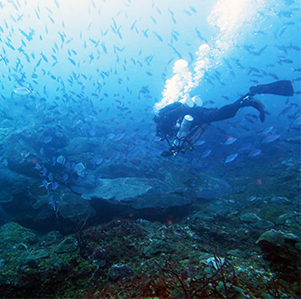
Marine Ecosystem Conservation

2026 John and Barbara Ferrera Ocean Science Lecture Series
Learn more
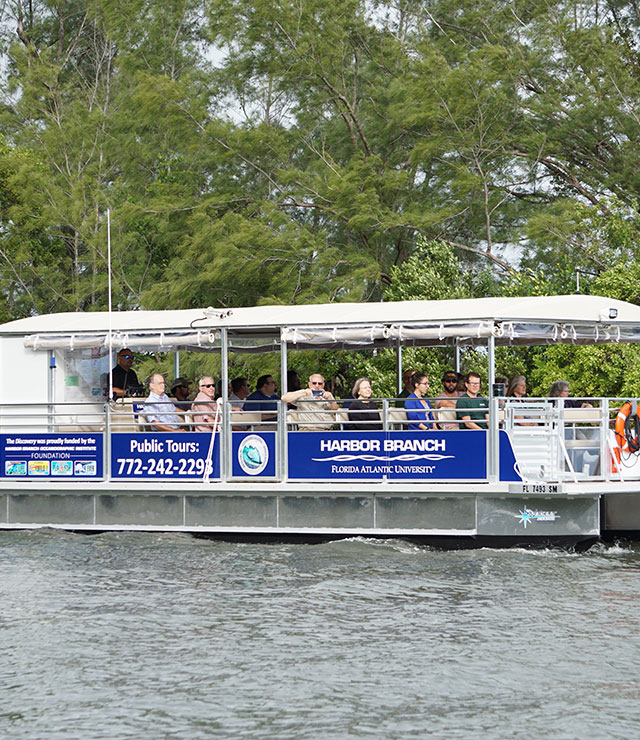
Travel Highlight of the Treasure Coast
Take A Tour
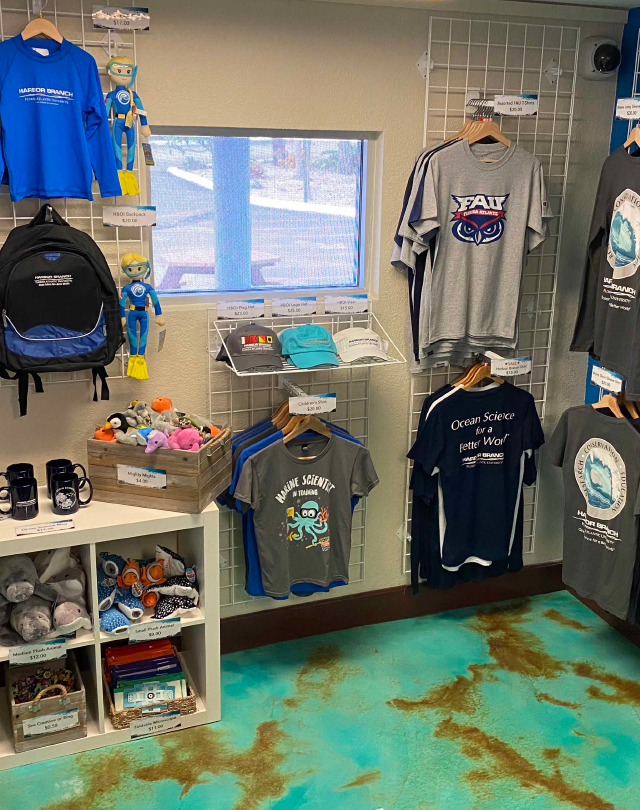
FAU Harbor Branch Gift Shop
Shop Now
Research
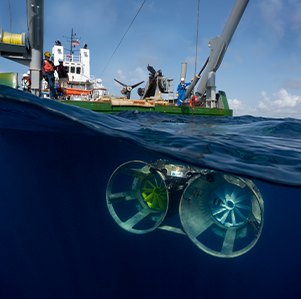
FAU Harbor Branch prioritizes solution-oriented research that addresses critical issues affecting coastal zone, oceans, and human well-being. Research scientists take a global approach, conducting studies around the world in varying climates, ecosystems, and cultures.

Harbor Branch
5600 US 1 North, Fort Pierce, FL 34946 772.242.2400
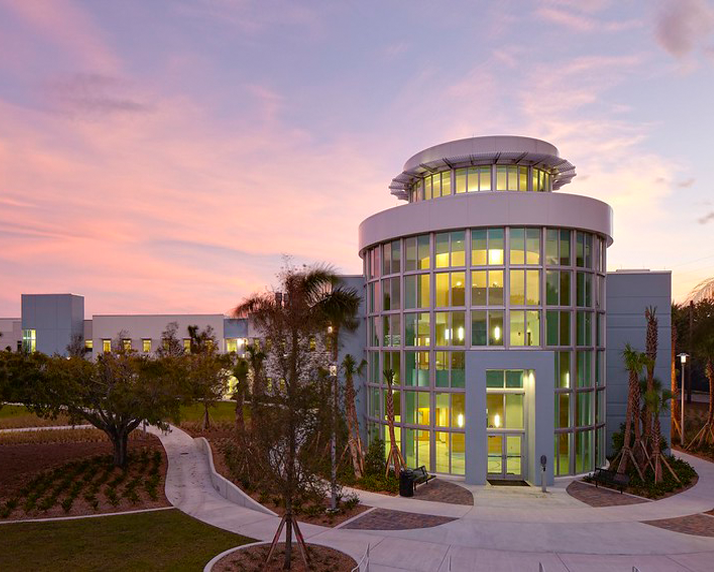
Florida Atlantic University (FAU) Harbor Branch Oceanographic Institute is a world class research organization with a focus on exploring the marine environments, studying key species and understanding the connection between humans and the ocean. Founded in 1971 as Harbor Branch Oceanographic Foundation, Inc., the Institute expanded its reach to over 100 miles along Florida’s east coast when it joined Florida Atlantic University in 2007. Located in St. Lucie County, our 144-acre campus along the Indian River Lagoon employs over 200 scientists, engineers, educators, staff and students. To this day, the Institute actively pursues solution-oriented research that addresses some of the most critical issues affecting coastal zones, oceans and human well-being.
Florida Atlantic University (FAU) Harbor Branch Oceanographic Institute is a world class research organization with a focus on exploring the marine environments, studying key species and understanding the connection between humans and the ocean. Founded in 1971 as Harbor Branch Oceanographic Foundation, Inc., the Institute expanded its reach to over 100 miles along Florida’s east coast when it joined Florida Atlantic University in 2007. Located in St. Lucie County, our 144-acre campus along the Indian River Lagoon employs over 200 scientists, engineers, educators, staff and students. To this day, the Institute actively pursues solution-oriented research that addresses some of the most critical issues affecting coastal zones, oceans and human well-being.
NEWS
03/17/2026
FAU and FWC researchers report endangered smalltooth sawfish are making a comeback in a historical Florida nursery. Young fish repeatedly use the same mangrove-lined habitats - offering new hope for recovery.
03/12/2026
An FAU study shows parasites can affect mating signals in green treefrogs by subtly altering male calls, influencing how females choose mates.
02/27/2026
FAU's Harbor Branch Oceanographic Institute received a $300,000 gift from the Robertson Family Fund for marine research focused on coral and seagrass restoration.
02/26/2026
FAU researchers have received a $900,000, four-year grant from the National Academies of Sciences, Engineering, and Medicine to advance AI-driven sea-level forecasts and tools for Gulf Coast resilience.